According to media pundits, software stocks are “crashing”, and there’s a “SaaSpocalypse” going on. Recently, Noah Smith wrote about “The Fall of the Nerds,” painting a picture of software engineers as the new master weavers: skilled artisans about to be displaced by AI-powered looms. Meanwhile, I’m…
After 27 years in tech—working at Sun Microsystems, Oracle, and AWS, then coaching dozens of colleagues through promotions from both sides—I’ve learned something that most people get backwards: Your career belongs to you. Not your company. Not your manager. Not the promotion committee. Everything el…
A YouTube viewer reached out to me the other day after watching one of my videos. He’d just started at a big tech company and wanted to know: How do you navigate the fog? How do you figure out what to focus on? What are things to avoid?
I’ve felt that fog three times—at Sun Microsystems, Oracle, and AWS. And after 27 years and countless conversations with mentees, I think there are three phases that help cut through it.
A 25-year career without goals—and why that worked better than the alternative This guitar is more than 15 years old. It’s my second one—the first was bought and sold in the ’80s. I tried lessons. Self-teaching. Regular practice. Still couldn’t play a recognizable song. Now it collects dust, remindi…
Watching Werner Vogels deliver his 2025 re:Invent keynote last week, I experienced one of those rare moments where separate threads suddenly converge. There he was, Amazon’s CTO since 2005, laying out five principles for “Renaissance Developers”, and I realized: these weren’t just career advice for …
A few days ago, I had a conversation with a former colleague who interviewed for a new job because she couldn’t stand her current one. Getting a new offer made her feel relieved and optimistic again: She had escaped.
Many others may not be so lucky this year.
Tech layoffs are accelerating. The economy—if we’re honest and look past the AI boom—looks shaky. Gold prices are spiking, which historically signals uncertainty ahead. And if you’re reading this feeling worried about your job, your future, or the general state of things, I know well how you feel.
Over 27 years and five major crises, I’ve learned one thing: the difference between thriving and drowning isn’t luck—it’s knowing what you can change and what you can’t.
”To me, you’re not just Systems Engineers—you are Speaking Engineers. I’ve got plenty of engineers working on great products. However, I need you to speak to customers and earn their trust in our technology.” That was Scott McNealy, CEO of Sun Microsystems, talking to a room full of technical profes…
The best insights on AI don’t come from the technologists. They tend to be too deep inside the matter, often missing the human connection, the creativity angle, or the bigger picture.
And that’s exactly what you’ll get from this course.
Fun fact: Seth Godin used to work with SF authors like Isaac Asimov, Arthur C. Clarke and Ray Bradbury, building interactive computer games and early digital media projects in the 80s. He says he’s basically preparing himself for the advent of AI for decades, so he has some good insights here.
Disclosure: I got access to the course for free as part of a different project Seth is working on (more on that, later). I do think the price of € 69,99 (or whatever it is in your local currency) is worth it.
Any opportunity to learn from people like Seth Godin is priceless. Don’t miss the final Q&A sections, they contain lost of nuggets of wisdom!
Update (2025-09-19): Changed the generic post picture to a screenshot of Seth Godin from his course.
Working for my then employer’s Munich office in 2011, I felt it—that hollow sensation when your career becomes a treadmill. The acquisition of the company I originally joined had stripped away the technological beauty and purpose I’d thrived on for more than a decade. The rigid culture, the pure commercial focus, the loss of autonomy.
I wasn’t incompetent, broke, or irrelevant… I was just bored.
And boredom, I realized, was the first horseman of a dying career.
A human being should be able to change a diaper, plan an invasion, butcher a hog, conn a ship, design a building, write a sonnet, balance accounts, build a wall, set a bone, comfort the dying, take orders, give orders, cooperate, act alone, solve equations, analyze a new problem, pitch manure, program a computer, cook a tasty meal, fight efficiently, die gallantly.
Specialization is for insects.
— Robert A. Heinlein
When I read a recent article about Expert Generalists on Martin Fowler’s blog, I immediately changed my LinkedIn title. Finally, someone had named what I’d been doing for 27 years without realizing it!
Here’s a secret: after almost 13 years at Amazon Web Services, I still felt like most people around me were smarter and more capable than me. And now, as a blogger looking at other writers? That feeling hasn’t gone away. If this sounds familiar, you’re experiencing imposter syndrome—and you’re in ex…
Back in the late 80s, I was a computer-enthusiastic teenager helping my mother, who was leading the German consulate in Rome at the time. I still remember teaching her secretaries how to use PCs for word processing instead of their trusty typewriters. I guess that was my very first gig as tech suppo…
154 months of building solutions at AWS taught me something unexpected: the most resilient professionals are people who can build cloud architecture, debug a cultural problem, coach a group of executives, mentor a struggling colleague, and learn something entirely new by Thursday. Think Robert Heinl…
In my current job, I occasionally mentor people and one of the questions I often get is: “How do you find good opportunities?” By which people mean cool technologies to explore, great projects to be part of, opportunities to talk at conferences, great companies to join, interesting people to meet, a…
As of last week, I started working for Amazon Web Services (AWS) as a Solutions Architect, helping customers architect systems and solve technical problems using the latest cloud computing technologies. I’m very thankful to be able to work here, as it brings me back to the very center of IT innovation and gives me the opportunity to do lots of new and interesting things.
In the last weeks, I’ve been digging around AWS and its services, playing with stuff and meeting lots of inspiring people. So I thought I’d put together a few links for those interested in exploring the world of the AWS cloud computing platform for you to learn more about AWS:
The universe is change; our life is what our thoughts make it. (Marcus Aurelius)
If you have a job in IT (and who among my readers hasn’t?), then it is going to fundamentally change soon.
Why?
In my own job, I see the full spectrum from where IT innovation is created to the very last laggards who are still depending a lot on mainframes and other ancient technology. Some things in IT are new (like, every week there’s a new startup/technology/trend that is shaking up the industry), and some things are just repetitions of stuff that has happened before, albeit in slightly different colors.
So now, the world of IT as we know it is changing (again) and this time, change will impact organizations, roles and jobs.
Let’s dive a little bit into what’s happening. Don’t worry, change is good, but only if you prepare for it.
Because at the end of the day, customers pay real money only if there’s some real value they see in a solution.
And that is the problem most people in IT struggle with: How is what you do in IT related to your company’s total value chain?
Most of the time, people, both those working in IT and those selling and supporting into IT departments are consumed with functions and features, tech specs, standards and other tech stuff. Worse yet: Some people look at Oracle’s Engineered Systems like Exadata and Exalogic and they only see a bunch of servers in a rack, because all they know is components, servers, tech stuff.
This is dangerous terrain: Because if you can’t show the business value of your IT to your company, you’re going to be put on the list of cost centers to be squeezed, and budget cuts are never a good motivator for your job.
So what is the value of IT to the business? Or more specifically, what is the value of Engineered Systems for our customers’ businesses?
One of the first things that customers and sales teams realize when dealing with Engineered Systems is: They fundamentally change the IT architecture of a business.
Change is good, it means progress. But change is sometimes seen as a bad thing: Change comes with fear.
The truth is that Engineered Systems really empower IT architects to add value to their business, application and data architectures, without worrying about the technology architecture.
To understand this, we need to dig a bit deeper into Enterprise Architecture, specifically the TOGAF flavor of it.
I changed into a new role at Oracle: I now work for the EMEA Engineered Systems Architecture Team (ESAT). We support Oracle’s EMEA Engineered Systems business by engaging with customers, enabling our field organization with trainings and through evangelization.
You can call me biased towards Engineered Systems (no link, page no longer exists) now, but that would be like accusing a Mac fanboy of suffering from the Stockholm Syndrome, when it’s actually the other way round.
The other side of the “biased” medal really is that I have a choice of where I want to work, and one of the reasons I changed from my cozy SPARC/Solaris Technology camp to the Engineered Systems crowd is: I believe the world of IT is changing.
Every year, on the last Friday of July, Sysadmin Day is celebrated around the world.
You know, the guy (or gal) that makes sure you always receive your emails on time, strips away the spam, cuddles your web server so you can write blog articles, or makes sure the network is always online, so you can read your favorite blogs. Or install new servers and storage so your web experience becomes faster and so your data is never lost.
Sysadmins often have a hard time: Noone calls them to tell them “Thank you for delivering all my emails!” or “Thanks for making sure my data is backed up every day!”. Instead, they only get phonecalls when something goes wrong, or worse yet, some anonymous electronic complaint in some soulless ticketing system.
Therefore, this Friday, the 30th of July, 2010, think about your sysadmin, call her up and say something nice, or consider giving them a gift. Here are some geeky gift ideas for sysadmins to celebrate Sysadmin Day 2010, from low-budget to truely-devoted-appreciation pricing order.
After all, you really don’t want your sysadmin to turn into a grumpy BOFH, do you?
In a recent blog article about the future of IT admins, my MUCOSUG-Buddy Wolfgang wondered whether the new generation of self-managed, appliance-like systems like Oracle Exadata (no link, page no longer exists), Oracle Sun Storage 7000 (no link, page no longer exists) and their friends from other vendors are making IT personnel redundant, or what kind of jobs IT people are supposed to be doing in the future.
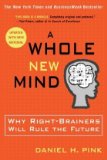
This reminded me of Dan Pink‘s book “A Whole New Mind” (Amazon.com|co.uk|de, BooksOnBoard (no link, booksonboard.com no longer exists)). Pink argues that today’s “left-brainish” jobs are threatened by “abundance, automation and Asia” (the latter really meaning “outsourcing”) and that today’s knowledge workers need to learn how to better employ their “right-brain” and add creativity to their jobs, as a new competitive differentiator.