During our summer vacation in Italy, I had a silly idea: what happens if you feed an image generator random data instead of a prompt? It’s a bit like provoking hallucinations instead of avoiding them. What do image generators produce that is truly inside them, if the prompt doesn’t carry any meaning…
Last month I sat down with Cris Roata to record an episode of her podcast, Catching More Green Lights in Life. It went live today! Cris asked me what I tell people who are afraid of AI, and I gave the answer I usually give: treat it like an intern, train it patiently, expect the first attempts to be…
On constrained serendipity, learning by doing, and whether the system is the art. I’m chatting with Claude, kicking around ideas on building a tool that generates AI images, but without the prompting. I like to start these chats by brain-dumping ideas into it. In this case it’s about auto-generating…
A package arrived a few months ago. Inside: a deck of cards with a red telephone on the box. “The Mentor Deck” by Seth Godin. I’m a beta tester, so I got one of the first 2,000 decks ever made. Each card has a QR code on the back that launches an AI conversation with a virtual mentor—Seth himself, o…
At 54 years old, I just started a YouTube channel.
This is an experiment. I recently read Anne-Laure Le Cunff’s book Tiny Experiments and decided to try something I haven’t done before: creating my own videos, not for a company or conference, but for anyone who might find them useful.
The weather forecast for this weekend doesn’t look too great (at least for where I live in), so why not visit some strange and fun places on the internet?
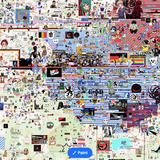
Here’s something weird I recently found: Wplace. The idea is simple, but powerful: Overlay pixels on top of a world map, then let anybody edit those pixels, one pixel at a time.
The result is fascinating: from simple logos and drawings, through meme imagery and icons to the most complex and artistic pixel drawings. Though the terms of service do forbid the use of bots, I can’t imagine some of the images having really been painted pixel by pixel. There’s a 1 pixel every 30 second throttling, probably to prevent misuse or bots, too.
Some of the stuff is quite breathtaking, some just crude or immature. Kinda like the whole internet.
The best insights on AI don’t come from the technologists. They tend to be too deep inside the matter, often missing the human connection, the creativity angle, or the bigger picture.
And that’s exactly what you’ll get from this course.
Fun fact: Seth Godin used to work with SF authors like Isaac Asimov, Arthur C. Clarke and Ray Bradbury, building interactive computer games and early digital media projects in the 80s. He says he’s basically preparing himself for the advent of AI for decades, so he has some good insights here.
Disclosure: I got access to the course for free as part of a different project Seth is working on (more on that, later). I do think the price of € 69,99 (or whatever it is in your local currency) is worth it.
Any opportunity to learn from people like Seth Godin is priceless. Don’t miss the final Q&A sections, they contain lost of nuggets of wisdom!
Update (2025-09-19): Changed the generic post picture to a screenshot of Seth Godin from his course.
Quite literally: this blog is now officially in autumn mode! 🍂
During our summer vacation, while watching over our dog Elvis, I spent some time doing recreational coding on the balcony of our vacation home in Sottomarina, Italy. The result is a seasonal bit of JavaScript/SVG animation for this blog’s header, which you can now enjoy on the main page, constantin.glez.de. But only during the autumn months, of course!
What started as a simple idea to add variety to my header turned into a 903-line journey of learning physics, mastering SVG patterns, and discovering just how much fun coding can be when there are no deadlines or requirements—just curiosity and Claude as my sparring partner. 🎯
All I wanted was to press a button and hear SomaFM Groove Salad through my home stereo. 🎵
What I got instead was six weeks of diving into AV receiver telnet commands, Raspberry Pi power mysteries, and NFC webhook proxies. Sometimes I spent an entire week debugging my Home Assistant setup only to discover I’d been using the wrong IP address the whole time 🤦♂️.
But here’s the thing: the journey is the reward. Sure, I could have just lived with telling Alexa to turn on my AV receiver, connect to it over Bluetooth, then asking it to play what I want. But then I wouldn’t have learned how UPNP broadcasts get mangled by WiFi bridge modes, or that a 2.2W Raspberry Pi can teach you more about power supply stability than any electrical engineering textbook.
This is the story of how a simple goal—press button, get music—led me down some of the most beautifully complex rabbit holes I’ve explored in years. And why that complexity is exactly the point. 🐰
What happened was that last weekend, my family and I played Exploding Kittens: Good vs. Evil, which we were recently gifted. What a fun game! A random idea struck me: why not ask Claude to put together a playlist for us?
Hi Claude, we‘re about to play a few rounds of Exploding Kittens (“Good vs. Ev…
Over the last few days, I’ve been working on putting Elvis, our Dachshund, onto this blog’s banner. The goal was to create a smooth animation where Elvis appears by rising from the bottom of the banner, then leans his paws over the border—adding some personality to the site while exploring modern web animation techniques.
Refactoring my banner into SVG was only the beginning: the next step was animation. I continued with the “AI as a teacher” model and asked Claude to explain to me concepts like IIFE, how the browser’s DOM processes SVG elements, which SVG properties are GPU-accelerated and other CSS performance conc…
In Summer 2010 I learned about a cool new geeky movie called Iron Sky (no link, ironsky.net no longer exists) that was crowd-funded. I decided to help finance it with a small sum.
In December 2010, I was invited to attend the Iron Sky shootings in Frankfurt together with my brother. This is where we got to meet the crew, the actors, the people behind the movie and other investors. And I thought: Wow, this is not only cool, this is for real! Everybody was 100% determined to make this the coolest movie ever, and everybody put in so much attention to detail, love and true craftmanship that I thought: “Yep, this is going to be a true movie milestone!” And I also got to shoot an interview with the director and the inventor of Iron Sky. This time, my brother and I together invested a bit more to help this baby fly.
Don’t worry, this is not a desperate attempt at SEO for my blog (although I do appreciate your likes, Tweets, RSS subscriptions and other ways you help me reach a wider audience), nor is this my entry into the latest contest of IT BS Bingo.
It just occurred to me yesterday that Big Data is everywhere. Even during your weekend jogging run.
If you’ve been following my blog or the Systemhelden.com podcast for some time, then you probably know that I’m a big fan of and small investor in the movie Iron Sky, a crowd-funded science-fiction comedy about the Nazis who went to the dark side of the moon in 1945 and come back to conquer Earth in 2018.
A few weeks ago, I had the privilege of attending a pre-screening of the movie’s beta version in Helsinki, Finland. What can I say? It exceeded my high expectations!
In a recent blog article about the future of IT admins, my MUCOSUG-Buddy Wolfgang wondered whether the new generation of self-managed, appliance-like systems like Oracle Exadata (no link, page no longer exists), Oracle Sun Storage 7000 (no link, page no longer exists) and their friends from other vendors are making IT personnel redundant, or what kind of jobs IT people are supposed to be doing in the future.
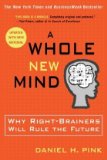
This reminded me of Dan Pink‘s book “A Whole New Mind” (Amazon.com|co.uk|de, BooksOnBoard (no link, booksonboard.com no longer exists)). Pink argues that today’s “left-brainish” jobs are threatened by “abundance, automation and Asia” (the latter really meaning “outsourcing”) and that today’s knowledge workers need to learn how to better employ their “right-brain” and add creativity to their jobs, as a new competitive differentiator.
Science Fiction stretches our imagination and makes us dream about cool, future, distant worlds and realities. And it’s fun, too.
But Science Fiction also serves an important purpose: It prepares society for the future. What will happen when technology X becomes available? How will our work, social and emotional lives change? What challenges and opportunities will we face, once certain new technologies become available?
There’s also a feedback circle around scientists, engineers and SF writers: Scientists discover new laws of nature, engineers apply them to create new technologies and SF authors show us the possibilities, inspiring the scientists and engineers where to look next, what new principle to explore and which new technologies to make real.
Here are my top 3 Science Fiction, but realistic novels of all time that help us prepare for the future. They are all based on solid futuristic research, still they are mind-boggling and thought-provoking. When you read them, you’ll get a true glimpse of the future - and view the present and the past in a new light.
I’ve been eying ebook and ebook reader developments for some time and decided to become an ebook early adopter: Over the holidays, I bought myself a Sony PRS-600 Ebook Reader (no link, page no longer exists). In this new blogging category, I’ll explore a few aspects of ebooks, formats and the ecosystem while trying to figure out what’s in it for you and me and the geeks in us.
Before we dive into ebook-land, it’s probably useful to figure out what the point of ebooks is in the first place, what we want from them and what we should expect of them. This is useful because today’s consumers, vendors, and the whole industry seem to be distracted by features, hype and old habits, sometimes missing the point.